
Hybrid Solar System in Bangladesh
Hybrid Solar System in Bangladesh
The Smart Energy Solution
Hybrid solar system in Bangladesh are revolutionizing how energy is managed, offering a seamless combination of solar power and backup energy storage. These systems function much like conventional grid-tie solar setups but with the added advantage of hybrid inverters and batteries to store surplus energy for later use. This unique feature allows hybrid systems to double as a backup power supply, similar to UPS systems, ensuring uninterrupted electricity during outages.
A hybrid solar system merges power generated from photovoltaic (PV) panels with energy from conventional sources, optimizing efficiency and reliability. It is an ideal solution in areas where electricity costs are high, providing significant savings while promoting sustainable energy use.
By investing in a hybrid solar system in Bangladesh, homeowners and businesses can reduce dependence on the grid, lower electricity bills, and contribute to a greener future. Its adaptability and long-term benefits make it a smart choice for energy-conscious users.
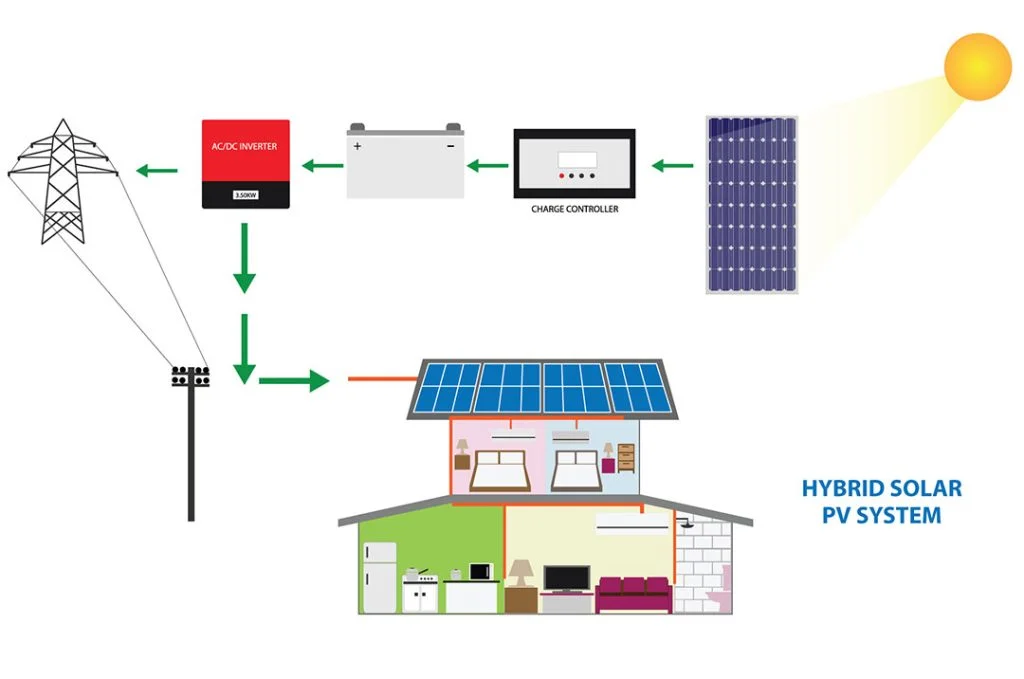
Key Components of a Hybrid Solar System in Bangladesh
A hybrid solar system in Bangladesh comprises four essential components that work together to deliver efficient and reliable energy management. Understanding these components is crucial for anyone considering this advanced energy solution.
Solar Panels
Solar panels are the primary component of any solar system, capturing sunlight and converting it into electricity. High-quality photovoltaic (PV) panels ensure maximum energy generation, even in varying weather conditions.
Hybrid Inverter
The hybrid inverter is the system’s brain, managing power flow between solar panels, batteries, and the grid. It enables seamless energy switching and ensures efficient use of available power.
Battery Storage
Batteries store excess solar energy for later use, providing a backup during power outages or at night. This feature is particularly beneficial in Bangladesh, where power disruptions are common.
Grid Connection
A hybrid solar system maintains a connection to the utility grid. This allows users to draw power when needed or export surplus energy, reducing electricity costs.
Together, these components make hybrid solar systems in Bangladesh a reliable and sustainable energy solution for modern needs.
Advantages of Hybrid Solar System in Bangladesh
A hybrid solar system in Bangladesh is an innovative solution that combines the best features of grid-tied and off-grid solar systems. It provides flexibility, reliability, and energy efficiency, making it an excellent choice for both residential and commercial use.
One of the key advantages of a hybrid solar system is its ability to store excess energy in batteries. This stored power can be used during peak hours or power outages, ensuring uninterrupted electricity supply. For areas with frequent load shedding, this feature acts as a dependable backup, similar to a UPS system.
Another benefit is cost savings. By reducing reliance on the grid and using stored solar energy during high-tariff periods, users can significantly lower electricity bills. Additionally, hybrid solar systems support efficient energy management by prioritizing solar energy usage, minimizing waste, and reducing environmental impact.
With rising electricity costs and a growing need for sustainable energy, hybrid solar systems in Bangladesh are the perfect choice for those seeking a smarter, greener future.
Disadvantages of Hybrid Solar System in Bangladesh
While a hybrid solar system in Bangladesh offers numerous benefits, it’s important to consider its potential drawbacks before making an investment.
One of the primary disadvantages is the initial cost. Hybrid solar systems require advanced components like hybrid inverters and batteries, which make them more expensive than traditional grid-tied systems. Additionally, the batteries have a limited lifespan and may need replacement every 5–10 years, adding to long-term maintenance costs.
Another challenge is space and installation requirements. The system’s batteries and additional components need adequate space, which can be a concern for properties with limited room. Moreover, hybrid systems depend on proper maintenance to ensure optimal performance, which can increase operational complexity compared to simpler systems.
Despite these disadvantages, the long-term benefits of energy savings, backup power, and sustainability often outweigh the downsides. Evaluating these factors carefully can help users decide if a hybrid solar system in Bangladesh is the right choice for their needs.