
On Grid Solar System in Bangladesh
A Smart Energy Solution
An on-grid solar system in Bangladesh is an efficient and cost-effective way to harness solar power while staying connected to the national grid. This type of solar system is ideal for urban and commercial areas where reliable grid access is available.
The primary advantage of an on-grid solar system is its ability to reduce electricity bills. It generates solar power during the day, which can be used directly for consumption. Any excess energy is sent back to the grid, and users often receive credits through a net metering system, further lowering costs.
Another benefit is its simple setup, as on-grid systems do not require batteries. This reduces installation and maintenance costs compared to other solar systems. Moreover, with fewer components, these systems are more space-efficient and easier to maintain.
In a country like Bangladesh, where energy demands are rising, an on-grid solar system is a sustainable solution that helps households and businesses save money while contributing to a greener environment.
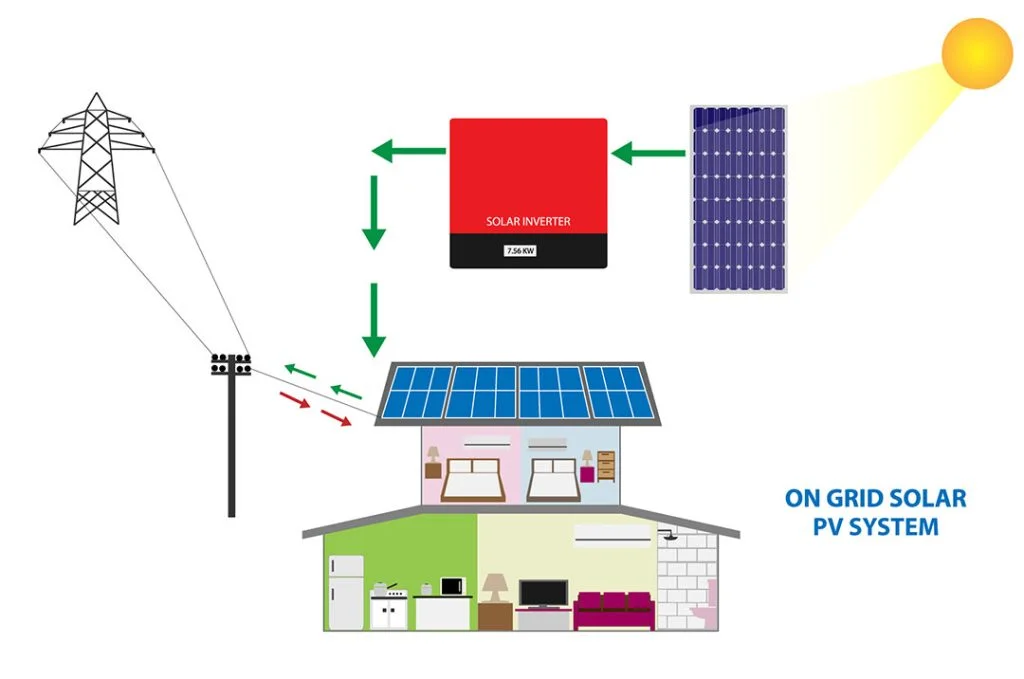
Key Components of a On Grid Solar System in Bangladesh
An on-grid solar system in Bangladesh relies on four key components that work together to deliver efficient and reliable solar power. These components are designed to maximize energy generation and seamlessly integrate with the national grid.
Solar Panels
Solar panels are the foundation of any on-grid solar system. They capture sunlight and convert it into electricity, ensuring a steady supply of renewable energy throughout the day.
Grid-Tie Inverter
The grid-tie inverter is a critical component that converts the direct current (DC) generated by the solar panels into alternating current (AC) used by household and commercial appliances. It also synchronizes with the utility grid for smooth energy transfer.
Net Metering System
A net meter tracks the energy exported to and imported from the grid. This allows users to earn credits for surplus power, reducing electricity bills significantly.
Connection to the National Grid
The system connects directly to the utility grid, eliminating the need for batteries. This reduces installation costs and ensures uninterrupted power availability.
With these components, an on-grid solar system in Bangladesh offers a cost-effective and sustainable energy solution.
Advantages of On Grid Solar System in Bangladesh
An on-grid solar system in Bangladesh offers numerous advantages, making it an ideal choice for homes and businesses looking to reduce energy costs and embrace sustainability.
One of the key benefits is cost savings. On-grid systems allow users to harness solar power during the day, directly offsetting electricity usage from the grid. Any surplus energy generated is sent back to the national grid, and with net metering, users can earn credits, further reducing their monthly bills.
Another significant advantage is the elimination of battery costs. Unlike hybrid or off-grid systems, on-grid solar systems don’t require batteries for energy storage, lowering the upfront and maintenance expenses.
Additionally, on-grid systems are scalable and efficient. They can be easily expanded to meet growing energy needs without requiring significant infrastructure changes.
By adopting an on-grid solar system in Bangladesh, users not only save money but also contribute to reducing carbon emissions, promoting a cleaner and greener environment for future generations.
Disadvantages of On Grid Solar System in Bangladesh
While an on-grid solar system in Bangladesh offers many benefits, it’s essential to understand its potential drawbacks before deciding.
One of the primary disadvantages is its dependence on the utility grid. On-grid systems cannot function during power outages, as they lack battery storage to provide backup energy. This limitation makes them less ideal for areas with frequent load shedding.
Another concern is the lack of energy independence. Since these systems are tied to the grid, users remain reliant on the utility company for energy supply during non-sunny hours or outages.
Additionally, while on-grid systems eliminate battery costs, they require a reliable and consistent grid connection, which may not be feasible in rural or remote areas. The installation process can also involve lengthy paperwork and approval for net metering.
Despite these challenges, an on-grid solar system in Bangladesh remains a cost-effective and sustainable option for regions with stable grid infrastructure and minimal power disruptions.