
Off Grid Solar System in Bangladesh
Off Grid Solar System in Bangladesh
Energy Independence Redefined
An Off Grid Solar System in Bangladesh is the perfect solution for areas with unreliable or no access to the national grid. This type of solar system operates independently, providing complete energy autonomy by storing excess power in batteries for later use.
The primary advantage of an Off Grid Solar system is its ability to ensure uninterrupted electricity. This is especially beneficial in rural regions and areas prone to frequent power outages. With the capability to generate and store solar energy, users are not reliant on the grid, offering peace of mind and energy independence.
Off Grid systems are also highly sustainable and eco-friendly, helping to reduce carbon footprints while meeting energy needs. Though the initial investment may be higher due to the inclusion of batteries, the long-term benefits of savings and reliability outweigh the costs.
By adopting an Off Grid Solar system in Bangladesh, users can enjoy energy freedom while contributing to a greener and more sustainable future. It’s an ideal choice for those seeking self-sufficient and renewable energy solutions.
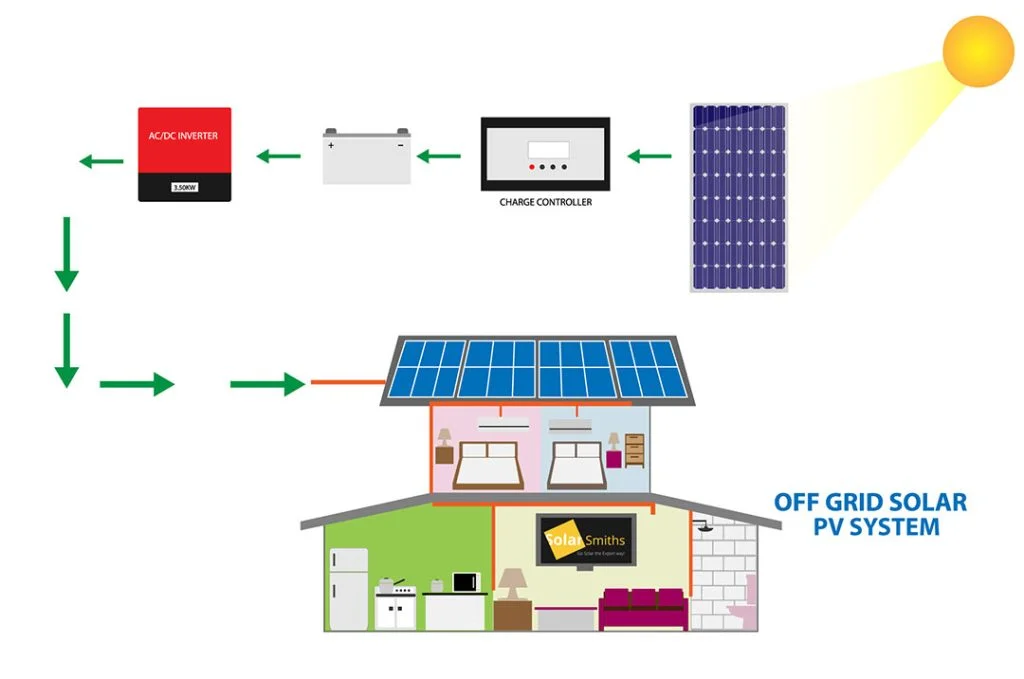
Key Components of a Off Grid Solar System in Bangladesh
An Off Grid Solar system in Bangladesh is designed to provide complete energy independence, especially in areas without access to the national grid. It consists of several key components that work together to generate, store, and distribute solar power efficiently.
Solar Panels
The solar panels are the heart of the system, capturing sunlight and converting it into electricity. High-quality photovoltaic (PV) panels are essential for maximum energy generation, even in fluctuating weather conditions.
Charge Controller
A charge controller regulates the flow of electricity from the solar panels to the batteries, preventing overcharging and ensuring safe battery operation. It helps optimize the lifespan of the batteries.
Batteries
Batteries store the excess energy generated during the day for use at night or during cloudy days. They provide the essential backup power in an off-grid solar system, ensuring a continuous supply of electricity.
Inverter
The inverter converts the direct current (DC) electricity from the solar panels and batteries into alternating current (AC), which is used to power household appliances.
Advantages of Off Grid Solar System in Bangladesh
An Off Grid Solar system in Bangladesh offers numerous advantages, particularly for areas that lack reliable access to the national grid. One of the primary benefits is complete energy independence. These systems allow users to generate and store their own power, eliminating dependence on external electricity sources and ensuring uninterrupted supply, even during power outages or load shedding.
Off Grid systems are also sustainable and eco-friendly. By utilizing renewable solar energy, they help reduce carbon footprints and contribute to environmental conservation, making them an excellent choice for those committed to green living.
Another significant advantage is cost savings in the long run. While the initial installation may be higher due to the inclusion of batteries, the absence of recurring electricity bills makes Off Grid systems a cost-effective choice over time.
In regions with limited grid access, an off-grid solar system in Bangladesh provides a reliable, clean, and independent energy solution, promoting both energy security and sustainability.
Disadvantages of Off Grid Solar System in Bangladesh
While an Off Grid Solar system in Bangladesh offers energy independence, it does come with some challenges that need careful consideration.
One of the main disadvantages is the high initial cost. Off Grid systems require the installation of solar panels, batteries, charge controllers, and inverters, all of which can be expensive. This upfront investment can be a barrier for many users, despite the long-term savings.
Another challenge is the maintenance and replacement of batteries. Batteries have a limited lifespan and may need to be replaced every 5-10 years, which adds to the ongoing costs of maintaining the system.
Additionally, the system’s energy storage capacity may be limited. During extended cloudy days or periods of high electricity demand, the stored energy might not be enough to meet all needs, requiring careful energy management.
Despite these challenges, an Off Grid Solar system in Bangladesh remains an excellent choice for regions without reliable grid access, offering long-term benefits in terms of sustainability and energy security.